The Dragon Who Painted the Clouds: A Creative Story for Young Readers and Beyond
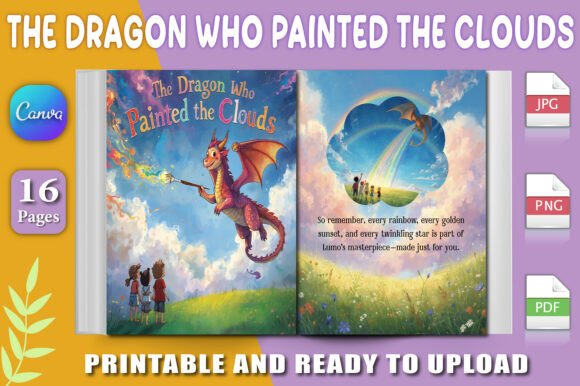
The Dragon Who Painted the Clouds is more than just a children’s story—it’s a gentle reminder of the power of creativity, kindness, and imagination. Written for ages 3–8, this enchanting tale follows Lumo, a unique dragon who uses a magical paintbrush to color the sky with rainbows, stars, and golden sunsets. Unlike other dragons who breathe fire, Lumo brings joy through art, inspiring young readers to see the world in new and beautiful ways.
A Story That Sparks Imagination and Creativity
At its core, The Dragon Who Painted the Clouds is a story about embracing individuality and finding magic in everyday moments. Lumo’s journey teaches children that being different isn’t a weakness—it’s a strength. Through simple text and whimsical illustrations, the book encourages kids to explore their own creativity and view the world with wonder. This makes it an excellent tool for early learners, bedtime reading, and even as a resource for educators looking to inspire young minds.
Integrating the Book Into Creative Workflows
For creators, writers, or artists, The Dragon Who Painted the Clouds can serve as a source of inspiration during the ideation phase of a project. The story’s emphasis on creativity and imagination aligns well with brainstorming sessions or design thinking processes. When you’re stuck, revisiting Lumo’s journey can remind you of the joy that comes from expressing yourself uniquely.
Additionally, the book can be used as a reference point when developing content for children. Its structure and themes make it easy to adapt into lesson plans, storytelling activities, or even interactive learning experiences. For instance, educators might use the story to introduce concepts like color theory, storytelling techniques, or emotional expression in a fun and engaging way.
Using the Book in Educational Settings
In classrooms or homeschool environments, The Dragon Who Painted the Clouds offers a versatile tool for integrating literacy, art, and emotional intelligence into a single narrative. Teachers can use the story to spark discussions about empathy, perseverance, and the importance of kindness. The book’s gentle tone and relatable characters make it accessible for students at various developmental stages.
Moreover, the story’s visual elements—such as the colorful skies and sparkling rainbows—can be used to enhance art projects or science lessons about weather, light, and color. By connecting the narrative to real-world concepts, educators can create a more immersive and meaningful learning experience for young readers.
Bedtime Reading and Mindfulness
As a bedtime story, The Dragon Who Painted the Clouds has a calming effect that helps children unwind and transition into sleep. The gentle rhythm of the prose and the dreamlike imagery of the story create a soothing atmosphere that promotes relaxation and focus. For parents and caregivers, this makes it an ideal choice for evening routines, especially for those looking to foster a love of reading in young children.
Furthermore, the story’s message of hope and resilience can have a lasting impact on a child’s emotional development. By highlighting the beauty of small acts of kindness and the power of creativity, it instills a sense of optimism that can carry over into daily life.
Collaborating With Other Tools and Resources
The Dragon Who Painted the Clouds can also be integrated into broader creative workflows. For example, if you're working on a children's book project, this story could serve as a model for how to blend storytelling with artistic expression. It demonstrates how a simple narrative can be enhanced with vivid descriptions and engaging visuals, making it a valuable reference for illustrators, writers, and designers.
Similarly, for those involved in content creation or marketing, the book provides a case study in how to craft a compelling brand story. Lumo’s unique personality and the story’s positive messages offer insights into building a strong, memorable character that resonates with young audiences.
Practical Tips for Using the Book Effectively
- Read Aloud: Use the story as a shared reading experience to encourage family bonding and language development.
- Art Projects: Create your own "dragon paintings" or cloud drawings inspired by the story’s visuals.
- Discussion Prompts: Ask children questions like, “What would you paint if you had a magical brush?” to stimulate imaginative thinking.
- Storytelling Activities: Encourage kids to retell the story in their own words or add new endings to the narrative.
- Book Clubs: Organize a small group of young readers to discuss the story and share their favorite parts.
Why This Story Matters in a Digital Age
In today’s fast-paced, screen-dominated world, stories like The Dragon Who Painted the Clouds offer a much-needed return to the simplicity and wonder of traditional storytelling. They remind us of the value of slowing down, paying attention to details, and finding joy in the little things. For adults, this kind of story can serve as a reminder of the importance of creativity and mindfulness in our own lives.
Whether you're an educator, a parent, or simply someone who appreciates good storytelling, this book has something to offer. It bridges the gap between imagination and reality, showing how a single story can inspire change, spark creativity, and bring people together.
Conclusion
The Dragon Who Painted the Clouds is more than a children’s book—it’s a celebration of creativity, kindness, and the magic of storytelling. Its simple yet powerful message makes it a valuable resource for educators, parents, and anyone looking to inspire the next generation of thinkers and dreamers. By incorporating this story into your workflow, whether for teaching, creating, or simply enjoying a bedtime read, you open the door to a world where imagination knows no bounds.